Editorial: South Korea needs balanced labor reform—not union overreach
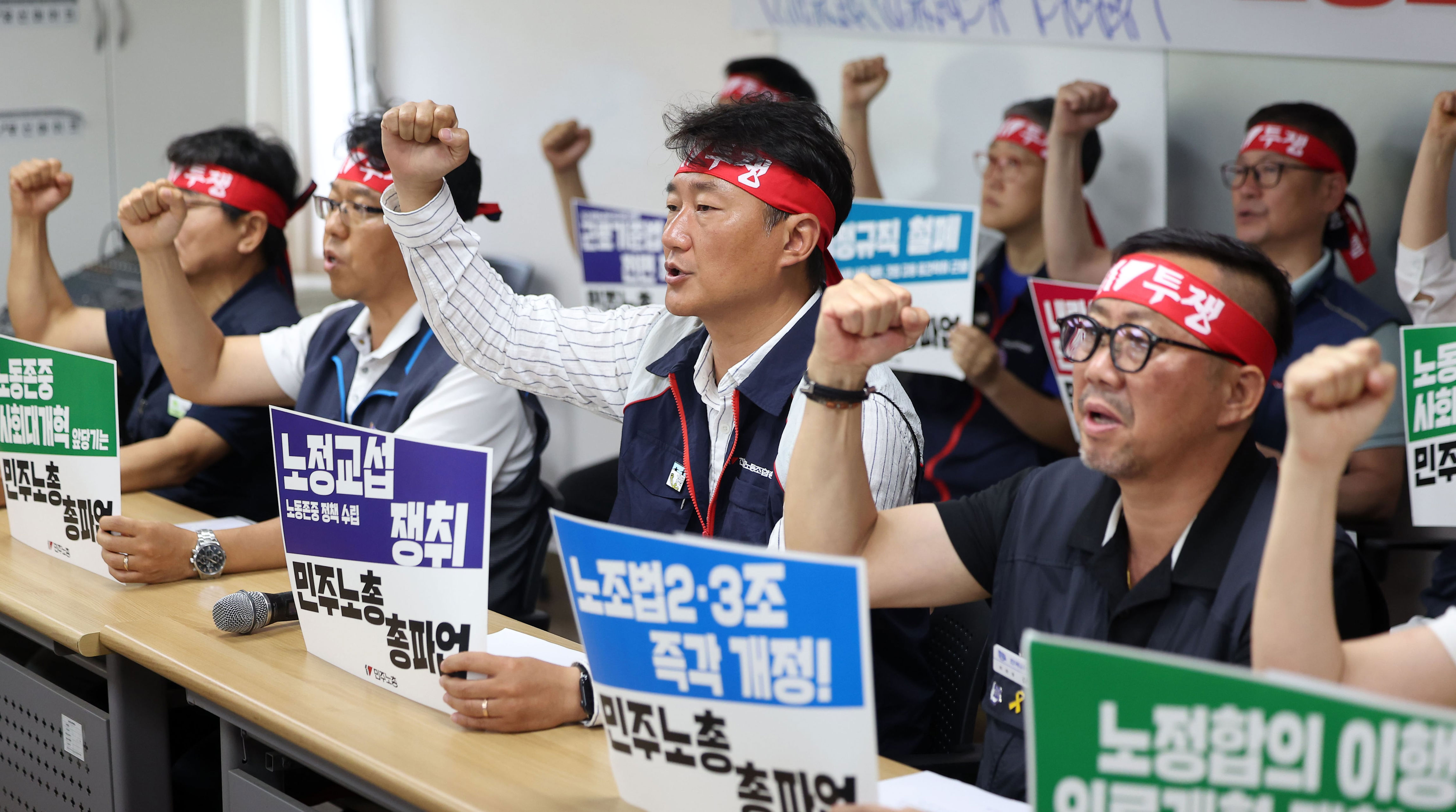
The Korean Confederation of Trade Unions (KCTU) has declared a two-day general strike on July 16 and 19, demanding renewed efforts to revise Articles 2 and 3 of the Labor Union Act, commonly referred to as the “yellow envelope law,” along with the abolition of the union accounting disclosure system. The announcement comes just days after a former KCTU chairman was nominated to lead the Ministry of Employment and Labor, raising concerns that the new administration is veering away from its stated commitment to balanced labor-management relations and reform, in favor of a union-driven agenda. Yet even before the administration has had a chance to begin, the KCTU is already applying pressure through a nationwide strike—an approach critics say reflects the group’s confrontational posture.
The union’s demands are deeply flawed. The yellow envelope law would allow subcontractor unions to bargain directly with parent companies. Businesses have voiced strong opposition, with some warning, “Some companies have hundreds of subcontractors—we’d spend the whole year in negotiations.” The proposed revisions would also restrict employers’ ability to seek damages for losses caused by illegal strikes—a change that could embolden unlawful walkouts and escalate labor conflict. The call to eliminate the union accounting disclosure system has provoked even greater backlash. The system exists to ensure transparency in how unions manage membership dues and public subsidies—an essential safeguard by any standard. Over 90 percent of affiliated unions have already complied. The KCTU’s refusal raises a fundamental question: What are they trying to hide?
South Korea’s economy is already under considerable pressure—from U.S.-driven tariff increases and weakening exports to sluggish domestic demand. The era of labor movements solely aimed at expanding union rights has passed. Power dynamics have shifted. Today, unions often wield more influence than the companies they confront. The real crisis lies in deepening structural inequalities: between regular and contract workers, large conglomerates and small firms, parent companies and subcontractors.
But with the inauguration of a new administration and a former KCTU leader entering the Cabinet, meaningful labor reform—reform that addresses these very disparities—is becoming increasingly difficult to even raise. The KCTU, which primarily represents regular workers at major corporations, remains unsatisfied. Instead, it is pressing ahead with demands critics describe as excessive, paired with a disruptive strike. With a labor minister drawn from its own ranks and a government now perceived as leaning toward organized labor, the KCTU faces little resistance. That’s exactly what makes the situation so worrisome. The question now is how far the union’s unchecked demands will go—and what consequences they may have for South Korea’s economy and labor market.

Posting Komentar untuk "Editorial: South Korea needs balanced labor reform—not union overreach"
Posting Komentar